
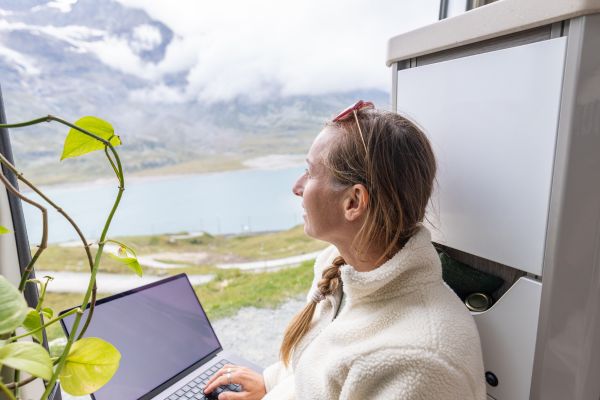
The idea of working from a café overlooking the sea sounds almost too good to be true. A laptop sits beside a cold drink, the afternoon light falls across the table, and there is no office manager watching the clock. For many people, this image represents freedom. Yet real digital nomad journeys are rarely as effortless as they appear in photographs.
Behind every beautiful view is a practical reality. Internet connections fail. Visas expire. Time zones become confusing. Loneliness arrives unexpectedly, sometimes in the middle of an exciting city. At the same time, there are moments of genuine wonder: finishing a project from a mountain village, making friends in a shared kitchen, or realizing that home can be a feeling rather than a fixed address.
Digital nomad life is not simply an extended holiday. It is a different way of organizing work, relationships, money, and personal identity. The experience changes from person to person, but certain themes appear again and again.
The First Step Usually Begins with Curiosity
Most digital nomad journeys do not begin with a dramatic resignation or a one-way ticket purchased overnight. They often start more quietly.
Someone works remotely for a few months and begins to wonder why they must remain in the same city. Another person takes a laptop on a short trip and discovers that work continues perfectly well from somewhere else. A freelancer may realize that clients care more about deadlines than location.
The first destination is often chosen with a mixture of excitement and uncertainty. Some people select a familiar city where the language feels manageable. Others choose a place because the cost of living appears affordable. A few simply follow the recommendation of another remote worker.
That first journey can feel liberating, but it can also be awkward. Finding accommodation, buying a local SIM card, learning public transport, and locating a reliable workspace all take energy. Even simple tasks become small puzzles. It is thrilling at first, though the mental effort can be surprisingly exhausting.
The Difference Between Travel and Everyday Life
Traditional travel allows people to temporarily step away from routine. Digital nomads must build a new routine while continuing to move.
This distinction becomes clear during the first busy workweek. A traveler may spend the morning exploring a market or visiting a museum. A remote worker may have to ignore the sunny weather outside and complete a presentation before an evening deadline.
The freedom is real, but it exists alongside responsibility. Many digital nomads eventually stop treating each destination like a sightseeing challenge. They may explore slowly, visiting one neighborhood at a time instead of rushing through every attraction.
This slower rhythm often creates a deeper connection with a place. The local bakery becomes familiar. The person at the coffee shop remembers an order. A nearby park turns into a regular walking route. These ordinary experiences are not as dramatic as major landmarks, but they often become the most meaningful memories.
Workdays Can Look Very Different
A typical day depends on the person, the job, and the time zone. Some digital nomads begin early, finishing most of their work before lunch. Others work late into the evening because their clients are located across the world.
One remote designer might spend the morning in a coworking space, take a long lunch, and explore the city before sunset. A consultant working with a team in another continent may start the day slowly and remain online until midnight.
This flexibility can be helpful, but it requires discipline. Without a clear routine, work may spread across the entire day. A quick email check in the morning can become three hours of work. An afternoon break can stretch too long, creating a stressful evening.
Experienced nomads often create personal boundaries. They choose fixed working hours, schedule days off, and avoid moving during demanding projects. These habits are not glamorous, but they make the lifestyle sustainable.
Internet Problems Become Serious Problems
Reliable internet is the invisible foundation of digital nomad life. When it works, nobody thinks about it. When it fails, everything changes.
A beautiful apartment may become unusable if video calls constantly freeze. A peaceful island may feel less appealing when an important file takes an hour to upload. Even coworking spaces sometimes experience outages or overcrowded networks.
Many remote workers learn to prepare backup options. They carry mobile data, research cafés with stable connections, and confirm internet speeds before booking long stays. Some avoid remote destinations during major projects, even when those places look attractive online.
These practical decisions reveal an important truth about digital nomad journeys: location independence still depends on infrastructure. Freedom requires preparation.
Loneliness Can Appear in Unexpected Places
Digital nomads often meet many people, but constant social contact does not always create lasting connection.
Conversations may begin easily in hostels, cafés, language exchanges, and coworking spaces. People exchange stories, share meals, and explore together. Then someone leaves. A few days later, another person moves on.
Over time, repeated goodbyes can become emotionally tiring. A person may be surrounded by interesting strangers yet still miss close friends who understand their history. Video calls help, but they cannot fully replace shared routines and physical presence.
Some nomads manage loneliness by staying longer in each location. Others return regularly to the same cities, gradually building community. Joining local classes, sports groups, or volunteer activities can also create relationships that feel less temporary.
The strongest connections often form when people stop treating a destination as a background and begin participating in its everyday life.
Money Shapes the Experience More Than Social Media Suggests
The cost of digital nomad life varies widely. A person earning a stable salary may experience travel very differently from a freelancer with unpredictable income.
Accommodation is usually the largest expense, especially in popular destinations. Short-term rentals can cost far more than local housing. Flights, insurance, coworking memberships, visa fees, and unexpected emergencies also add up.
Many nomads become careful planners. They track expenses, keep emergency savings, and choose destinations based on both lifestyle and budget. Some alternate between expensive and affordable locations. Others remain in one place for several months to reduce transport and housing costs.
Financial uncertainty can affect the emotional side of travel. It is difficult to enjoy a new city while worrying about unpaid invoices. For this reason, experienced remote workers often prioritize stable income before constant movement.
Cultural Differences Require Humility
Living temporarily in another country offers a chance to see daily life from a new perspective. It also creates opportunities for misunderstanding.
Communication styles, social expectations, working hours, and attitudes toward time may differ. What seems efficient in one culture may feel rude in another. What appears relaxed may actually follow a social rhythm that outsiders do not immediately understand.
The best digital nomad journeys involve curiosity rather than judgment. Learning a few phrases, respecting local customs, and observing before making assumptions can transform the experience.
Digital nomads also need to remember that destinations are not products created for remote workers. Local residents have their own priorities, challenges, and communities. Rising short-term rental prices and crowded neighborhoods can create tension in popular nomad hubs.
Responsible travel means spending thoughtfully, supporting local businesses, following local laws, and recognizing the impact of temporary lifestyles on permanent communities.
Constant Movement Eventually Loses Its Shine
At first, frequent travel feels exciting. Every arrival brings new streets, new food, and new possibilities. After several months, however, the repeated cycle of packing, flying, checking in, and rebuilding routine can become tiring.
Decision fatigue is common. Where should the next stay be? Is the neighborhood safe? Will the apartment be quiet? Does the country allow a long enough visit? What happens if a client schedules a call during the flight?
Many long-term nomads eventually slow down. They may choose two or three regular bases instead of changing countries every few weeks. Some settle permanently while continuing to travel for part of the year.
This does not necessarily mean the journey has failed. In many cases, it means the person has learned what kind of freedom actually suits them.
Personal Growth Happens in Ordinary Moments
The greatest changes often happen quietly. Navigating an unfamiliar city builds confidence. Solving problems alone creates resilience. Spending time outside familiar social expectations can reveal which habits and ambitions are truly personal.
Digital nomad life can also expose weaknesses. Poor time management becomes obvious. Avoided emotions may follow a person across borders. Travel changes the scenery, but it does not automatically solve dissatisfaction.
This realization can be uncomfortable, yet it is valuable. Many people return from digital nomad journeys with a clearer understanding of what they need from work, community, and home.
They may discover that they value flexibility more than status. They may realize that close relationships matter more than constant novelty. Some find a place where they want to settle. Others simply become more comfortable with uncertainty.
The Journey Is Less About Escape Than Choice
Digital nomad journeys are often presented as an escape from office life, routine, or conventional expectations. In reality, the most fulfilling experiences are usually not built around running away.
They are built around choosing deliberately.
That may mean working from another country for three months. It may mean traveling slowly while maintaining a stable career. It may also mean deciding that constant movement is no longer appealing.
There is no single correct version of the lifestyle. For some, digital nomadism becomes a long-term identity. For others, it is a temporary chapter that changes how they see the world.
The real value lies not in collecting destinations, but in learning how to create a life that feels intentional. The scenery may be memorable, but the deeper journey happens in the choices made along the way.