
Oman is one of the Gulf’s easiest countries to underestimate. It has the good roads travellers expect from the region, but the experience is far less dominated by towers, malls and nightlife than a typical Dubai break. Muscat sits between rocky mountains and the Arabian Sea, while a few hours on the road can take you to forts, cool highlands, desert dunes and turquoise wadis. For UK travellers looking for a first Gulf trip with more scenery and heritage, Oman makes a rewarding alternative.
The most useful Oman travel guide advice for a first visit is simple: combine Muscat with the interior rather than staying in the capital for the whole trip. A seven-day Oman itinerary is enough to see the country’s contrasts without spending every day in the car.
When to visit Oman
For most visitors exploring Muscat, Nizwa, the Hajar Mountains and the north-eastern coast, November to early March is the easiest period. Days are milder and drier, which makes city sightseeing, hiking and desert stays more comfortable. October and April can also be good choices if you do not mind warmer afternoons.
Summer changes the equation. From June to August, lowland temperatures commonly sit around 35°C to 45°C, so long outdoor days in Muscat can be exhausting. The Oman mountains are noticeably cooler, while Dhofar in the south has its khareef season from roughly mid-June to September. Around Salalah, cloud, mist and light rain turn the landscape green and keep temperatures far below those of northern lowlands. So when to visit Oman depends partly on the region you want to experience.
Muscat attractions worth giving time to
Muscat works best with at least two full days. The city is spread out, so you cannot simply walk from one major sight to the next. Taxis, ride-hailing where available, hotel transfers or a hire car make sightseeing much easier.
Sultan Qaboos Grand Mosque
The Sultan Qaboos Grand Mosque is the natural starting point. Its courtyards, arches, gardens and vast prayer hall offer a striking introduction to Omani architecture and Islamic design. Non-Muslim access is limited to set visiting periods, so check current opening times before setting out. Dress modestly, and women should carry a head covering for the visit.
Mutrah, the corniche and the souq
Mutrah is the part of Muscat many first-time visitors remember most clearly. Walk the corniche in the late afternoon, then move into Mutrah Souq for frankincense, silverware, textiles, spices and small souvenirs. Harbour views, old trading streets and evening light give the capital a more traditional atmosphere than its modern road network first suggests.
Museums and old Muscat
The National Museum is an excellent choice if you want context for the places you will see later in the trip. Nearby, Al Alam Palace can be viewed from outside, while the Royal Opera House Muscat provides a very different look at contemporary cultural life. These Muscat attractions show why the city deserves more than a quick overnight stop.
See the Oman mountains and historic interior
The Hajar Mountains are the strongest reason to leave Muscat behind. Jebel Akhdar is known for elevated villages, terraced farms and cooler air, while Jebel Shams is associated with huge canyon views and some of the country’s best-known hiking scenery. Jebel Akhdar access involves a police checkpoint where a suitable four-wheel-drive vehicle is required, so this is one part of the trip where vehicle planning matters.
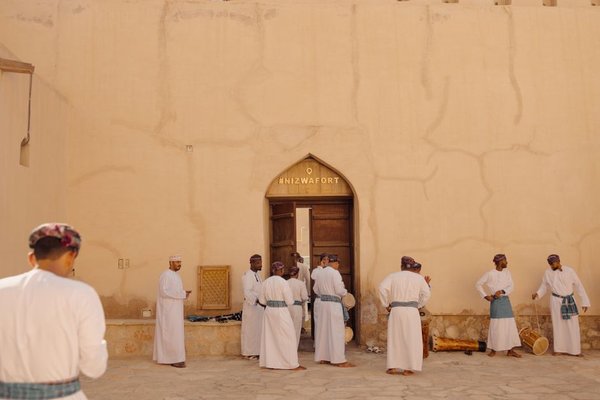
Nizwa fits naturally into the same route. Its fort and souq make an easy introduction to the historic interior, and nearby villages add date plantations, old houses and mountain backdrops. A practical two-day example is to leave Muscat in the morning, explore Nizwa, sleep in or near the mountains, then spend the following day walking, visiting viewpoints and returning to the capital in the evening.
Add a wadi, desert night and coastal drive
Wadi Shab is one of the most memorable outdoor stops for an active Oman itinerary. Reaching the main pools involves a short boat crossing followed by a walk over uneven ground, and the official tourism guidance recommends suitable hiking footwear, sun protection and plenty of water. Swimming is part of the appeal, but some sections require confidence in the water.
Wadi Bani Khalid offers another dramatic change of scenery and pairs well with A’Sharqiyah Sands. Rather than treating the desert as a quick photo stop, stay overnight if your schedule allows. Arriving before sunset, watching the light move across the dunes and waking early gives you a much better sense of the landscape.
If you have a full week, a sensible route is two nights in Muscat, one or two nights around Nizwa and the mountains, one desert night, then a return along the eastern side with a wadi or coastal stop. That route is more satisfying than trying to collect every famous place in one rushed circuit. For readers planning a similar journey, Middle East packing guide, driving abroad guide and Salalah travel guide are natural next steps.
Practical advice for UK travellers
British citizens travelling on a full British passport can currently visit Oman for up to 14 days without a visa, subject to entry conditions. Passports need at least six months of validity from arrival, and border officials may ask for proof of onward travel, accommodation and travel health insurance. Longer stays require the appropriate visa. Entry rules can change, so check GOV.UK and Oman’s official visa information again shortly before departure.
Road travel is generally the most flexible way to see the country, but distances can look shorter on a map than they feel in the heat. Avoid planning a mountain hike, a long drive and a desert arrival on the same day. It is also sensible to check current FCDO travel advice before flying, as wider regional developments can affect airspace and flight schedules with little notice.
Frequently asked questions
How many days do you need in Oman?
Seven days is a strong first trip, allowing time for Muscat, Nizwa, the mountains, a desert stay and at least one wadi. Ten days gives you more room for the coast or a slower pace.
Is Oman a good first Gulf destination?
Yes. It combines modern infrastructure with historic towns, strong local culture and unusually varied scenery. It particularly suits travellers who prefer road trips, hiking and heritage to nightlife and high-rise entertainment.
Do you need a car in Oman?
You can explore Muscat without one, but a car makes the wider country much easier. Choose the vehicle based on your route, especially if Jebel Akhdar is included.
What is the best month to visit Oman?
December, January and February are among the most comfortable months for a broad northern Oman trip. For Salalah and Dhofar, the summer khareef season is a separate reason to visit.
A Gulf trip that rewards going beyond the city
Oman’s appeal lies in how quickly the landscape changes. One morning can begin beside Muscat’s sea-facing corniche and end beneath mountain cliffs or desert stars. Give the capital enough time, but build the trip around at least one night in the interior and one nature-focused stop. That balance is what turns a simple city break into a memorable Oman trip.